Showing posts with label CLIL (different areas). Show all posts

INTERNATIONAL WOMEN'S DAY 2022


International Women's Day (IWD) is an annual global campaign marked on 8 March that celebrates the social, economic, cultural, and political achievements of women. The day also marks a call to action for accelerating women's equality. Each year the IWD campaign has a new theme, and in 2022 the theme will be #BreakTheBias. The following lines can be read on  every  IWD platform as an introduction to the topic:


Imagine a gender equal world.

A world free of bias, stereotypes, and discrimination.

A world that is diverse, equitable, and inclusive.

A world where difference is valued and celebrated.

Together we can forge women's equality.

Collectively we can all #BreakTheBias.

Individually, we're all responsible for our own thoughts and actions - all day, every day.

We can break the bias in our communities.

We can break the bias in our workplaces.

We can break the bias in our schools, colleges and universities.

Together, we can all break the bias - on International Women's Day (IWD) and beyond.


How can we collaborate to break the bias? You  and your students can take part in the campaign proposed by IWD 2022 Partners in many different ways.  Have a look at the different options  here


Do you need any downloadable resources for your classroom? I hope these wil be helpful for you:


Resources for the Primary classroom:


  • OXFAM resources : these activities can easily be adapted to suit the needs of younger and older students. 
  • Play with these Classroom Activity cards: use them  to engage children  in activities and conversations that foster an inclusive mindset. Apart from using the ones provided, invite your  students to add their own IWD activity for friends and/or family. Then, share them with students from other classrooms, place them on the school walls and upload them onto the school website.

Resources for both Primary and Secondary classrooms:


 The World Association of Girl Guides and Girl Scouts  has  released an  impactful  resource. There are three categories of activities within the pack:

  • Understanding Gender: exploring gender roles and stereotypes.
  • Women’s rights are Human Rights: exploring the concept of rights and why they are important.
  • Gender & Climate Change: exploring how climate change disproportionately affects women and girls.

The pack materials are aimed at children aged:

  • between 6 - 11 years
  • between 12 - 15 years
  • 15 years and above
You can download the pack here. 


Resources for the Secondary classroom: 


Global Dimension platform provides educators with a wide variety of resources on IWD: 

- Global Learning Programme Resources for Science teachers at Secondary level can be downloaded from here

- You will find Gobal Learning Programme Resources to develop Literacy  here.   The proposals will be specially useful if you teach Language, Global Issues, PSHE or Ethical Values. For those of you who are working on the reading plan, the last activity focuses on a proposal which students will carry out in  the library of the school. It can be used in any language. 

-  If you teach History, this is your pack of resources to celebrate IWD. 

- Math teachers will find some ideas here .



   Let's break the bias together! 

Writing in the content areas (ii)


My previous post aimed at highlighting the importance of working with text type models and providing students with frames that scaffold their written production. 

Today I would like to share my "Ten commandments" for writing across the curriculum:

1) Spend the necessary time to make students see that they are going to have a clear purpose for their writing task.  CLIL provides a purpose for language use so this will not be a difficult aim to achieve. 

2) Deconstruct text models with students, that is, analyze the structure of the text, the use of specific vocabulary and linking words, the way arguments have been used to support the leading statement, etc.  You can see an example here

3) Allow some time for students to generate ideas and organize them in the classroom. I suggest that they should work with online dictionaries to help them face vocabulary issues while you monitor the process and answer their questions related to text structure,  sentence patterns, connectors, paraphrasing and so on.

4) Offer a wide range of writing tasks. The reason is obvious: learners learn by doing. 

5) Do not link all writing to assessment.  Students need to see that they write to learn but they should not feel anxious.  

6) Provide students with scaffolding. Needless to say that when the learner can perform the task independently, the scaffolding  should be gradually taken away. 

7) Integrate writing tasks with different activities they have been doing : write about something they have read or about a video they have seen, a  visit to the Museum, an experiment, etc.

8)  Find an audience or a reader different from the teacher. There are different ways you can do this: they can share their productions with other students in the same class or they can include their pieces of writing int he school magazine, for instance. 

9) Do not limit your feedback to the end of the writing process. Tell students they are progressing while they are writing (if you allow time for writing in the classroom, which I strongly recommend)

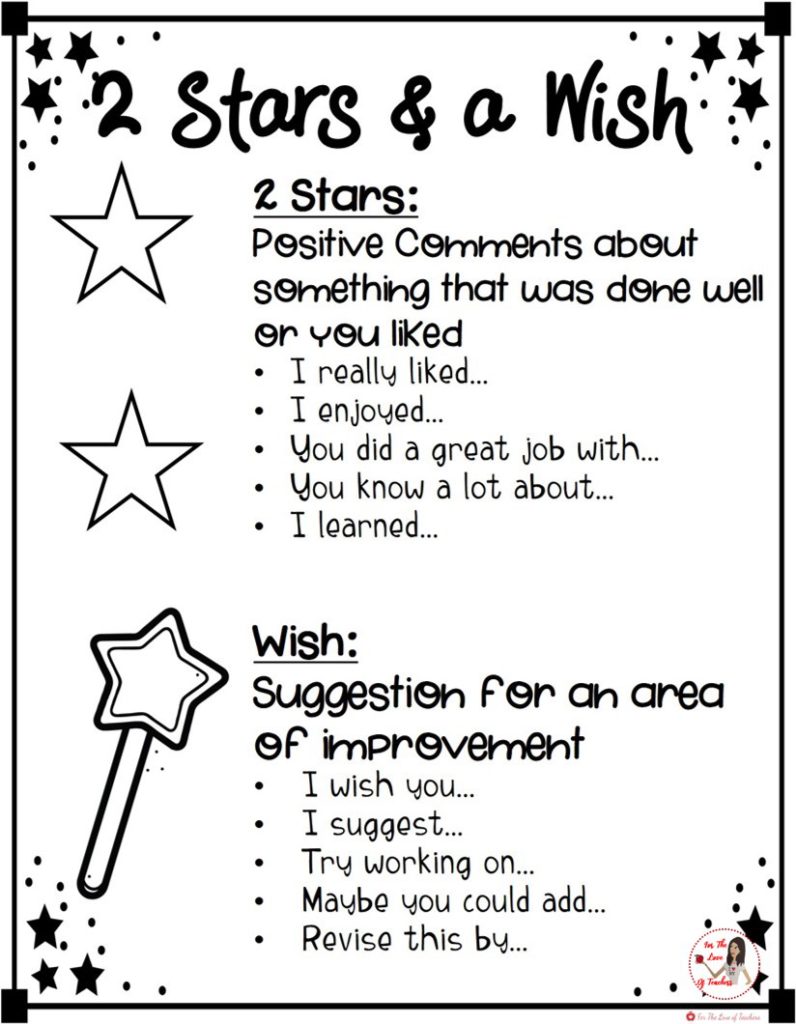
10) Do pair work, do peer workthe brainstorming and planning can be done in pairs. This will also be a natural way to integrate skills because students will be talking.   Introduce peer-assessment too, asking students to say something they liked about their peers' written production and something they could improve or is missing. Remind them that they should pay attention to content and not only to accuracy. You can hand out this simple tool to students so that they fill it in after  reading  their classmates' written work. 


Looking forward to knowing  about your  viewpoint on each of the  "commandments" from the list above. 

Writing in the content areas (I)


I am aware that CLIL teachers are very concerned about students' written productions across the  curriculum. Therefore, today I am  going to start by sharing the conclusions of a  research which   was  carried out two years ago in Granada.   The participants were  a total of 112 students who  were in   the fourth year of Secondary Education. All of them came from public schools. 

The groups were organized into: ‘CLIL group’ ,who studied their Secondary educational period following a CLIL pedagogical approach in English,   and ‘Non-CLIL group’,  who studied their Secondary educational period in Spanish, being the subject of English as  a foreign language a part of the official curriculum for Secondary Education.  All participants were Spanish native speakers and learners of English as a L2 ranged in age between 15        and 16 years old, which means that age was  not a factor that influenced the results.

As the analysis of the written productions of the students proved, the  CLIL group outperformed the non-CLIL group in relation to the written competence. 


Hence, it can be stated that the implementation of the CLIL approach has a positive effect on the written competence in a second language. These findings are limited to this particular study but we can claim that  there are  numerous studies that have drawn similar conclusions.

Nevertheless, if we analyze the errors in the CLIL group, we clearly see that we must keep on trying to find the most effective ways to motivate students to write and  ease their  writing process.

(Professor Silvia Corral Robles from the University of Granada has kindly shared her research paper with all of us. You can access it from here).   


In this first post on writing in the content areas,  I would like to highlight the importance of  purpose-driven writing.  Therefore, before considering how to provide students with frames to support their writing, let's begin by analyzing what type of texts our students need to write in specific content areas. Different authors classify  CLIL texts into different types but for the scope of this entry I will just share a couple of  tools that will be enough to foster our personal reflection on the issue:  

  • the first tool is from www.teachit.co.uk, a very useful platform that comprises a range of creative, engaging and effective approaches to support Secondary teachers across all subjects. You can click here to see this tool on CLIL text types.      

Once students have understood there are different text types with their different purposes, work with examples: show students good  examples  and ask them to think about the features that make them say it is a good piece of writing. Why not show students weak examples too?  My students loved this mixture and they were able to identify why some texts are effective whereas others are not.

When we host our next  online seminar,  we will see how many of the aforementioned text types your students are producing or have to produce and we will provide you with a variety of writing frames that will make the  task easier.  For those of you who may not be familar with the concept of writing frames, you can have a look at this  example for Geography and History  and this one for Science.


Looking forward to knowing  about your personal experience and  classroom strategies so as to improve students'  writing competence across the school subjects.  

FAT AND SKINNY QUESTIONS IN CLIL


First things first:

Happy New Year to all readers! 

I am sure you will have guessed that this post is going to focus on one of the topics for our  January seminar session, i.e., teacher talk strategies to make content comprehensible for students. Undoubtedly, effective questioning is one of those strategies because it enables the teacher to keep students' attention and increases learners' engagement in the class. I wrote a previous post about this topic a few years ago. You can read it here

Below these lines, I would like to share my personal decalogue on Do's and Don'ts regarding effective questionning in any content area:

1. Provide students with enough time to answer your question: not every learner processes thinking at the same speed. (This was  demonstrated in the early 1970s through deep  research  conducted by  a giant in the field of Education: Mary Budd Rowe. You can access it here. )

2.Try to include "fat" questions as often as possible. They will increase students' thinking skills and  make room for discussion and debate among students. Do you need ideas on how to create them? I hope this list  I have written will be useful. 

3. Do plan your questions in advance. Needless to say that you will always have to improvise some of your questions depending on the students' responses  but you know that one crucial ingredient of effective teaching is planning. 

4. Avoid the "hands-up" approach as much as possible. What can you do instead? At least, I can think of the following : 

- Ask students to prepare their answers in pairs or small groups after having given  the question some thought.

- Ask a question, pause for some seconds for  all students to think of  an answer and then call a student's name at random.

5. Encourage students' questions and replies to each other's questions and responses.

6. Give positive feedback even if students' answers are not on the right track. Try giving some clues or examples  so that the student realizes his answer was not accurate and starts a self-correcting process. 

7. Avoid excessive praise since this may discourage other students who are not so skillful at answering. 

8. Focus on one question at a time. Thus, you will be able to offer the  specific language support they need for their responses.

9. Create a trustworthy learning environment so that students  do not feel anxiety if they do not provide you with the right answer.

10. Show that you are interested in students' responses. Your facial expressions and non-verbal language in general are bound to be helpful for learners to gain trust and improve their reponse while they keep on talking. 


I said  I would offer my personal decalogue so my post should finish here. 

Looking forward to knowing about your questioning strategies  in our seminar session on January 18th.


Further reading:


https://education.nsw.gov.au/teaching-and-learning/professional-learning/teacher-quality-and-accreditation/strong-start-great-teachers/refining-practice/teacher-questioning/effective-teacher-questioning


CLILSTORE: A store of copyleft CLIL materials


Next Tuesday we will meet for our last CLIL seminar session in 2021 and we will focus on preparing students across the curriculum for their final term oral presentations. As in every online session, we will peep into the most useful ICT resources to help your students with their oral outcomes. Besides, we will also talk about new CLIL units which you can access for free from different sources. One of these sources deserves special attention due to its  wide range of units for different language levels and topics: Clilstore.

The project is co-funded by the Erasmus+ Programme of the European Union and partners from several countries, including Spain (Valencia) have  worked hard  to offer all CLIL teachers  this amazing platform where you are bound to find motivational resources for your classrooms.  

Clilstore uses Wordlink, a tool  which links arbitrary webpages automatically, word by word with online dictionaries. And Wordlink in turn uses Multidict, a multiple dictionary lookup facility which makes use of freely available online dictionaries. Both Wordlink and Multidict were developed as part of the European funded POOLS-T project (2008-2010) and their development is continuing as part of the present COOL project.

This video shows how both students and teachers can enjoy the full range of resources provided by Clilstore: 


My heartfelt congratulations to all participants in Clilstore project. There is no doubt that their hard work has clearly paid off. 

DICTIONARIES FOR LEARNERS USING ENGLISH TO STUDY OTHER SUBJECTS


Our second seminar session will take place on November 16th and we will try to  give a clear insight into the most useful ways to make students acquire subject-specific vocabulary. Right now,  I would like to share this list of online dictionaries with all CLIL teachers and I would also like to let you know about the  fourth edition of  Oxford Student's Dictionary.  This dictionary is aimed at intermediate to advanced learners of English. It has a particular focus on curricular vocabulary and includes the words you need to study other subjects such as Art, Computing, Science, Geography, History, Literature, Maths, Sport and much more.


You can access the curricular videos and 360-degree interactive images that accompany the dictionary on this page.

Using dictionaries is an essential part of the process when we talk about vocabulary instructional strategies. However, providing a description or an explanation of the term is only the first step of the process. It goes beyond the scope of a blog entry to analyze such a process so we can  recap by saying that  reading and instruction on subject-specific vocabulary are the key to overcoming students' difficulties with academic content.   This is easy to say but how can it be done? Fortunately, there is  what could be called  "a toolbox of vocabulary strategies " that work and you will be provided with them throughout  our  seminar sessions.  


Looking forward to meeting you online on November 16th.


DEVELOPING CRITICAL THINKING THROUGH CLIL


Today I would like to focus my post on critical thinking skills in any content area. By now all of you know that I am a firm believer in the importance of  appropriate classroom  questions. Following critical thinking essentials,  I will try to show you some powerful evidence to support my belief. In order to do this, I will  share the outcomes of a recent research entitled " Effective questioning in CLIL classrooms: empowering thinking".  

The research was conducted by  Professor Rebecca Valverde.  I would like to congratulate her on this powerful research  and I highly recommend that should read it by entering this link. In short, the research aimed at determining whether stimulating higher-order thinking in CLIL classrooms  would result in a significant improvement in student outcomes. The results showed that this methodological intervention succeeded in its aim, as a marked improvement in student responses was achieved. These findings highlight the value of optimizing the use of questions to foster critical thinking and empower students for the knowledge economy in which we live.

Rebecca's reader-friendly paper includes a wide range of examples for  students aged 9 and 10 years old. I reckon that you will be able to adapt them to fit your Secondary classroom contexts  but I have written this worksheet with some examples for different content areas at Secondary level. I hope you will find it useful. 

Last but not least, keep in mind what the greatest critical thinker said: 


LEARNING RESOURCES FROM MUSEUMS TO CELEBRATE INTERNATIONAL MUSEUMS' DAY ON MAY 18th


International Museums' Day will be celebrated on May 18th. Fortunately,  we will be able to "travel" from Getxo to Bilbao and visit our museums: the Fine Arts Museum, the Guggenheim Myuseum and many others. 

From these lines, I would like to suggest that you should enter this wonderful site and choose the activities you prefer to support your curriculum topics. 

To make your search easier, enter here and browse by key stage, subject and format.


This video is another option for you if you want your students to learn about museums while having a good laugh. 


SOL'S 30th Anniversary Festival


 Dear CLILers: 


Keith Kelly has sent  Factworld members  this e-mail and I am copying it below these lines so that you can know about a superb initiative related to CLIL: 


I'm going to be doing a talk on CLIL Projects for a fund-raising event on Monday. If you are free and interested, you can register via this link:

https://bit.ly/3g8iPzV

It's free, but donations are welcome at the Just Giving page link in the advert  www.justgiving.com/campaign/SOL2021

SOL - Share One Language is a tremendous institution which has been offering accessible opportunities to teachers and learners for many years, and the current pandemic circumstances have made things extremely difficult for them to keep things afloat.

Please share if you have friends and colleagues who might be interested to join the rich programme of talks, and / or might contribute.


Thank you very much for sharing this  with us,  Keith.  

The Psychological Experience of Integrating Content and Language


Multilingual Matters  has recently published  a  book  which brings together a wide range of empirical chapters on  both the psychological strains and benefits related to teaching and learning a subject through a second or other language.

The studies encompass a range of areas, such as Content and Language Integrated Learning (CLIL), Foreign Language Medium of Instruction (FMI), bilingual education and other related approaches to integrating content and language.

They feature a variety of psychological constructs, including identity, self-confidence, motivation, self-concept, teacher and learner beliefs, affect, anxiety, stress, mindsets, attributions and well-being, from the perspectives of both teachers and learners. 

I reckon you will smile when you see that we have been talking about the aforementioned issues in our CLIL seminar sessions.  For instance, Professor Erwin M. Gierlinger has written a  very clarifying chapter on one of our  main concerns: "L2 Confidence in CLIL Teaching: A Tale of Two Teachers".

Therefore, this  book is essential reading for anyone interested in ensuring that teachers and students are properly supported and that their experiences of integrated content and language settings enable them to come to fruition. 

You may wish to have a look at the contents of the book before buying it and before  we can have the chance to meet again. When we do, I suggest starting with professor Gierlinger's chapter because once again he gives a very clear insight into the issue of L2 confidence in CLIL contexts.  

ESSENTIAL FEATURES OF CLIL MATERIALS


Multilingual call 2021-2022 has just been published and this means that there will be new schools joining us in implementing subjects through English. Yesterday I  received  some telephone calls from teachers who are concerned about the most  adequate materials for CLIL lessons.  If I had to describe the key to effective  CLIL materials, I would say something like this: choose those materials that allow students to develop real-world tasks in the target language. 

 Going deeper into the features of CLIL materials without breaking the  scope of  a blog entry, we could say that the following ingredients are a must: 


·    Each unit should include  explicit correlation between  content and language objectives .

 ·   Input- output scaffolding tools (On the one hand,  key language support to enable students reach the content objectives. On the othe hand, visual support such as   illustrations with labels and captions that are closely related to  subject-specific vocabulary and objectives)

 ·   Content-area text types which are carefully chosen and always accompanied by content-area literacy strategies.

 ·   Graphic organisers like Venn diagrams, tables, and flow charts which help all  learners to support both active reading and  written or oral presentation of content  by students.

 ·  ICT applications which result   in a virtual ‘hands on’ format  that increase motivation among students  through active engagement in the learning process.

 ·   Integration of all language skills throughout the CLIL unit.

 ·    Cognition skills are gradually developed 

·    Formative assessment tasks are included.

·  Teachers' notes include everything the teacher needs for a good CLIL approach. 


In my view, the aforementioned  features can be  put into practice  in  any  content area  at Primary and Secondary levels. I am looking forward to letting you know about the "How-To-Do-It" after the Easter break. During March we will chiefly  devote our energy to planting the seeds of multilingual projects for the next  academic years  at our schools.

However, I will not wait till April  to provide you with some more food-for-thought  on the topic  by recommending  an inspiring book on CLIL materials by Amanda McLouglin, CLIL materials writer and teacher trainer : “How to write CLIL materials”, published on February 25th 2021. You can read about it here.

From these lines, I would like to express my congratulations to Amanda on this book for  her   clear and accurate insight into CLIL materials.    

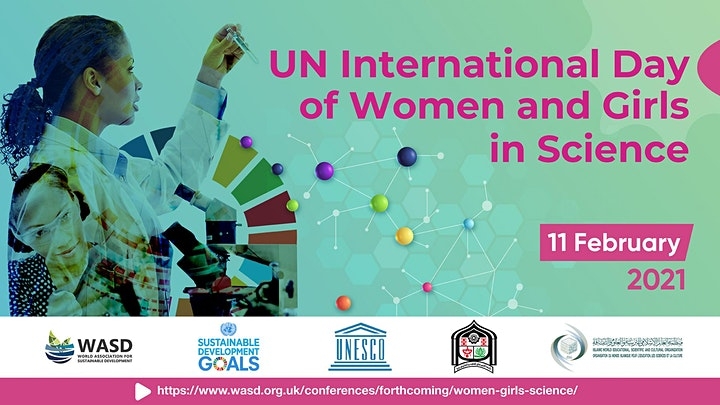
International Day of Women and Girls in Science, 11 February


On the International Day of Women and Girls in Science, let's do our best as educators to address and transform the existing gender gap: at present, less than 30 per cent of researchers worldwide are women. According to UNESCO data , only around 30 per cent of all female students select STEM-related fields in higher education. Globally, female students’ enrolment is particularly low in ICT (3 per cent), Natural Science, Mathematics and Statistics (5 per cent) and in Engineering, manufacturing and construction (8 per cent).

 From these lines, I will try to help teachers who read me by offering several  classroom proposals:


  •  In the Autumn of 2019, The Hastings Academy and Robsack Wood Academy worked on songs about Women Scientists. Songwriter Anna Page worked together with students and they created some inspiring  compositions.  Among them, there is a song that has touched my heart. It is  called "Women who were scientists" and I would say that it  conveys a very powerful message. If you want to know why, listen to the audio file and analyze   the lyrics  . I suggest that  students should  listen to the song and get familiar with the rhythm pattern.  Then,  you could  ask students   to work in pairs and  write a stanza about another famous woman who was forgotten till now.  


  • The play "Women scientists: past, present and future" was premiered in March 2016 at the University of Seville.  Although it is in Spanish, they have kindly provided us with a comica  didactical guide  and a quiz.           


  • Last but not least, making women visible site  is a collaborative project in four languages which offers a wide variety of activities in order to help teachers to foster women's visibility at our schools. Among the inspiring proposals they offer, I would highlight  a video game and  a card game. 


Once again, thank you very much for the great effort you make in order to let  our students  be aware of the need to bridge the gender gap. Please,  write to me through the comment section on this blog so that I can know about your students' reactions to the proposal you choose to celebrate February 11th. 

LFEE CLIL resources

LFEE team, Languages for Education inEurope, has  shown their expertise in the field of education  through the development of several key programmes which include Developing International Projects for Schools (DIPS).   Regarding recent projects, I would like to congratulate them on ELAPSE: Embedding Languages Across Primary and Secondary Education (2018-2020). 

The resources you  will  find  by clicking the link above put into practice the CLIL principles we have been analyzing in our seminar sessions and they include some features which are usually not available on free platforms, such as  short scripts for the target language that the teacher might want to use as well as  sound files which provide models of those scripted items.  

The lesson plans  have been designed and collated by native speaker teachers for learners in upper Primary and lower Secondary schools. The recommended age and stage is indicated in the Lesson Plans. Some are for a sequence of lessons, whereas others are just for single lessons, and all the  resources can be adapted to fit your individual teaching context.

If you want to know about ELAPSE, there is a recording of the webinar which took place in November 2020. You can follow it below these lines:

Universal Design for learning and CLIL (4)


Learners  are very different  in the ways in which they can be engaged or motivated to learn. Some students  are highly engaged by spontaneity and novelty while others prefer strict routine. Some learners might like to work alone, while others prefer to work with their peers. In reality, there is not one means of engagement that will be optimal for all learners in all contexts; providing multiple options for engagement is essential.

How can we do it? 

Well,  it is a difficult endeavour but we can  start by  asking students to analyze what makes their classes more or less motivating. This is a very good article on how to motivate students.

 
I would also recommend reading the strategies related to this principle in depth and check the different checkpoints here

I would like to give a very simple example of  checkpoint 7.1, i.e.,  optimize individual choice and autonomy by providing choices regarding the type of rewards od recognition available. My two practical examples for  this post are the following ones: 

The first one is  a tool for Geography teachers : Geoguessr. This  is a web-based geographic discovery game designed by Anton Wallén, a Swedish IT consultant, released on 9 May 2013. The game uses a semi-randomized Google Street View location for paying members and Mapillary  for non-members. The game requires players to guess their location in the world using only the clues visible. The free version is obviously not so interesting as the paid version. 


The second  suggestion  I would like to present today is a strategy called  Scientific Sensory Station, a play-based learning center in which students use their senses to explore scientific concepts.


You can sign up for a trial and see an example here.


To sum up, as you very well know, there is no magical wand to reach every student but  remember the key to approaching our goal: "if they do not learn the way you teach, teach the way they learn". 

Universal Design for Learning and CLIL (3)


UDL Principle II: Multiple Means of Expression


All educators know that there is not only one  means of action and expression that will be suitable for all learners; therefore, we should  do our best  to provide students  with a variety of alternatives for demonstrating what they have learned.

For those of you familiar with the Guidelines within UDL,  first I would like to focus on Guideline 5 and, specifically, checkpoint 5.2, i.e. "use multiple tools for construction and composition". 

In other words, how can we provide students with tools that match their abilities and the demand of the task regarding creation, construction or composition?  Let me give you some examples:


  • Language tool offers spell and grammar checking. Very useful for students who need help with their pieces of writing in any content area.

  • BookBuilder is the perfect tool to help students to create, share and publish their digital stories.  It also contains models which are ready to use.

  • Scratch is available in many different languages, Basque included. Students will be able to create their interactive stories, games and animations. 
      
  •  Canva   is the world’s easiest design tool that allows you to design anything and publish anywhere. 


Principle 2  also highlights the need educators have to provide options for executive functions (Guideline 6).  How can we help our students?   Let's consider a couple of tools:


  • Worksheets to set goals  : this site offers  worksheets , teaching ideas and lessons for Math, Language, Science, social skills, behavioral, social emotional learning and media literacy.  Besides all this, it contains  a variety of worksheets for setting goals, which will be really useful to set personal goals which are challenging and realistic. 
      
  • The learning Toolbox home enables students with several difficulties to be better learners.  Students have a menu that covers organization, note taking, reading, writing, test taking and Maths. 


Willing to know about how to make the most of  principle 3 ? Keep on reading this blog  because my next entry will focus on it.