Showing posts with label STEM. Show all posts

“BLOOM Stories of implementation” competition


Since 2018, the BLOOM project enhances knowledge about bioeconomy by providing teachers with ready-to-use material, to engage young people. This year, in collaboration with the STEM Discovery Campaign 2020, BLOOM is organising the “BLOOM Stories of implementation” competition to reward the most innovative classroom implementations of these materials. Join the competition and share your story!

How can your sctudents take part in this competition?
The ‘BLOOM Stories of Implementation’ competition will reward the most innovative classroom implementations of bioeconomy using the materials included in the BLOOM School Box, in four different categories of submission:

[1] Teaching bioeconomy in primary schools (individual work);
[2] Teaching with bioeconomy in secondary schools' STEM classes (individual work);
[3] Integrating STEM teaching with bioeconomy (teams of two STEM teachers of different subjects);
[4] Integrating STEAM teaching with bioeconomy (teams of up to three teachers of different subjects, including at least one STEM teacher and at least one non-STEM teacher)
When?

Teachers can start organising their lessons starting from November 2019 and prepare their stories to be submitted between 1 February and 30 April 2020 at 23:59 Central European Time (CET)!
The winners of each category will be invited to a teacher training workshop in Brussels, with travel, accommodation and meals covered, and the 20 finalist entries will be published on the School Network page of the BLOOM project!

Steps to participate:

1) Choose which BLOOM School Box resource works well in your classroom from the BLOOM School Box collection
2) Think of how you will implement bioeconomy in your classroom and if you will work collaboratively with other colleagues or on your own.
3) Run at least one bioeconomy lesson with your students and think about what evidence you have of your students’ engagement following your lesson(s).
4) Choose the appropriate submission category, double check the competition’s terms and conditions and fill in the submission forms (available since 1 February 2020).
Whether your school decides to take part in the competition or not, the resources this project offers in several languages , English and Spanish included, are really powerful to work on Bioeconomy topics. 

Teaching with Europeana


First of all,  I would like to start this first blog post in 2020  by wishing  all of you a  very Happy New Year loaded with love,  joy and health. 

A new year always makes us reflect on the importance of  finding new ways to face the essential  challenges in our lives, both personally and professionally. As I write this blog to try and help you on the latter, let me start by reminding you of Europeana, a wonderful platform I wrote about in a previous post you can read here.  

March 2019 marked the official launch of the Teaching with Europeana blog. Since then, the Europeana Education Community has grown and shared numerous inspirational learning scenarios and creative stories of implementation. But are you aware of all the possibilities the blog offers?

In  the  video below these lines,  teachers share their experiences using the blog and explain how its resources  can be very helpful for a variety of content areas. 


From this blog,   I would like to extend my congratulations to the  people and networks behind Europeana   for  making cultural heritage available to a very global audience.  

I am looking forward to meeting you in our next  seminar session on January 21st. Apart from focusing on  supporting students' written and spoken output,  we will enter the Europeana  platform and  blog to choose the most suitable resources for our  CLIL contexts. 

Science, Technology and Math coming alive through Engineering Design


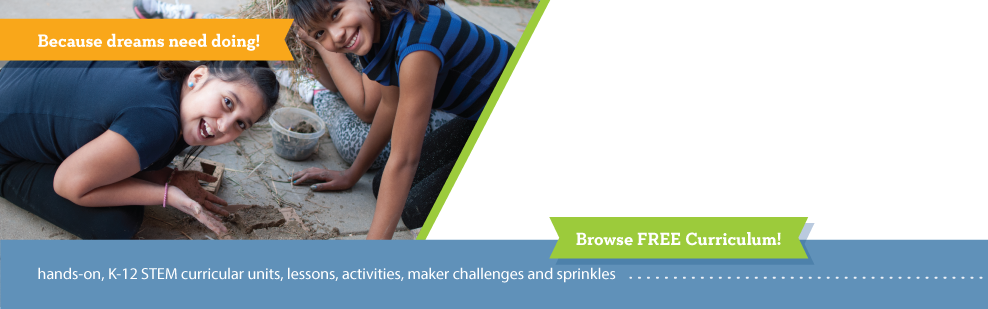
TeachEngineering is a  digital collection of  hands-on activities for teaching Science, Engineering Design and Maths  at both Primary and Secondary levels.

The TeachEngineering collection provides educators with free access to a  wide range of  videos  which include a thorough description of the activities you can carry out as well as the materials list and the cost of it.

Sprinkles (shortened versions of the most popular activities)  are described both in English and Spanish, which will be very helpful for  some students  in our school contexts. This is a good example of it.

How do you  get access? From any page, enter your search terms into the top right search box or use the Find Curriculum search on the home page to find what you want for your classroom. You can also use the monthly  editor's pickmost popular and recently added features to examine the lessons and activities - all available from the home page.

Membership is not required.  An optional MyTE workspace allows you to keep track of your favorite lessons and activities, or to share your experiences. 

No doubt, our heartfelt  thanks should be given to the University of Colorado  for their great contribution to our STEM classrooms. 

STEM is everywhere


Back to work and back to our CLIL Seminar! I am really happy to see so many of you have registered for the seminar and I am eager to start working with all of you on October 9th. Our first seminar will focus on basic resources for the subject areas you are implementing at school and I will try to facilitate your work by providing you with the academic language which  you will need to include in your CLIL suitcase for the whole school year. I will place special emphasis on the language for Science and the language for Geography and History. Besides, you will also get a planning template for your CLIL lessons. 


As many of the participants in the seminar belong to the STEM field, I would like to let you know about "STEM is everywhere" MOOC course. I believe that it  will be a very useful  course  for all teachers who wish to motivate students towards STEM careers because it  offers guidance and practical examples for you to bring real-world problems to your STEM teaching in an entertaining way. The course also aims to connect you with other STEM teachers so that you can share experiences and best practices.


"STEM is everywhere"    is the first Massive Open Online Course (MOOC) that is fully designed and carried out as part of the Scientix project, the community for Science education in Europe. It is now possible to register for this course that starts on 29 October 2018 and is completely free of charge.


The main objective of this new course is to connect Science, Technology, Engineering and Mathematics (STEM) classes with real life and to help teachers to integrate everyday problems into their STEM lessons and practices. For more information about the course and to register, click here.


As I mentioned above, we will meet on October 9th for our first seminar session and I must say I am looking forward to it on its 15th anniversary. 

SAY YES TO STEM


STEM Discovery Week 2018 is a joint international initiative that invites projectsorganisations and schools across Europe and around the world, to celebrate careers and studies in the fields of Science, Technology, Engineering and Mathematics (STEM). This year, Next-Lab participates in the STEM Discovery Week 2018 with a competition  meant to reward the best class implementation of the Go-Lab Inquiry Learning Spaces.

If you are organising a class implementation between February-April 2018, then you are eligible to participate in  the Next-Lab competition. 

The first thing you need to do is to submit your class implementation activity to the STEM Discovery Week activities map. In the form, and when asked to, please indicate clearly that you are taking part to the Next-Lab competition. Once you carry out your implementation, they will get back to you via email with some additional questions regarding the content of your activity, the resources you have used, and the impact on your students.

In order to enter the contest, your activity will need to fulfill the following criteria:

  • The submitted class implementation has to take place between March-April 2018
  • Create a new ILS ( Inquiry Learning Space) or adapt an existing one for your implementation
  • A minimum of 15 students need to take part to the class implementation
The winner will be invited to attend the Next-Lab Autumn School that will take place in Estonia in September 2018. Flight, hotel and subsidies will be covered entirely by the project.

I would like to encourage those schools which are already involved in STEM projects and invite any others who are ready to develop an activity that focuses on STEM subjects both at Primary and Secondary levels. Even though the deadline finishes at the end of April, you can still take part in it because a one-day activity is enough. 

World Science day for peace and development in our classrooms


Celebrated every 10 November, World Science Day for Peace and Development highlights the important role of science in society and the need to engage the wider public in debates on emerging scientific issues. It also underlines the importance and relevance of science in our daily lives.The 2017 theme is “Science for Global Understanding”. Global Understanding is key to peace and sustainable development in that it promotes the commitment of individuals and local communities in sharing knowledge for actions and behavioral change. Science is thus central to global understanding as it not only helps understand the world but also it assists in designing, developing and implementing the change we aim for. 

UNESCO strongly encourages all to join them  in celebrating World Science Day for Peace and Development by scheduling something special for that date. 

My proposal for your  Secondary classrooms needs three sessions and is based on the following video:
 
Before starting viewing the video above, prepare a handout for students with the most difficult words which are key to understanding and check they know those words.

While watching the video, ask students to write down the name of each of the scientists who,  according to the author of this video, changed the world. They should also try to understand  the reason why he/she  was essential for mankind. (Students  can use this  simple table to take notes while they listen).

Let students watch  the video twice and after watching the video for a second time,  ask them to  share their notes in pairs for about 15 minutes. After that,  proceed to check their understanding  of the contents of the video by asking different pairs to tell you what they have written. 

In the second session, group students in threes /fours and ask them to think about a  STEM discovery/ theory that   exemplifies the important role of  Science in our society. Each group  will have to write a paragraph about their favourite discovery and the reasons for their choice. This language support document will help them to express their opinion, agree and disagree with their partner. You can prepare copies of it and hand them out to students before  they  start talking in pairs. They will need about 45 minutes for this second task. 

Help students with websites they can use to carry out this task:

https://www.factmonster.com/science/general-science/life-changing-science-discoveries

http://list25.com/25-biggest-scientific-discoveries-in-history-of-mankind/

https://science.howstuffworks.com/innovation/scientific-experiments/5-scientific-breakthroughs-we-couldnt-live-without.htm


The third session that wraps up this micro-unit on the importance of Science and its impact on society will be aimed at listening to the different groups. Allow students to read their paragraph aloud for other  students to listen  and, if you feel like it, after all groups have been heard,  you can ask  students to vote for the "most important" discovery/theory/development. 

I hope this simple proposal will raise awareness of the importance  of Science in and for society. 

Scientix 3: Scientix Ambassadors Training Course 3rd edition


Another school year has started and with renewed energies and promising projects ahead, all of us will go on "CLIL-ing" in our diverse educational contexts. From these lines, I wish to welcome all of you to take part in our first seminar session on October 10th and I would also like to encourage you to enrol in the third Scientix Ambassadors Training Course to become a  Scientix Ambassador.

Just in case you have never heard of Scientix, I will start by letting you know that Scientix is  the Community for Science Education in Europe. It offers a superb network for Science Education Projects and it  has just published a new call for teachers who would like to become Scientix Ambassadors and a part of its fast growing Scientix Teachers' Panel.  

What do you have to do if you want to join this community of STEM teachers across Europe? You would have to apply for the on-line course they are offering for free. The current  edition of the course will run between 2 October and 4 December 2017. Places are limited to 300 participants per edition. 

Participants will be chosen from among those that apply through this  form  before September 20th  taking into account the order of application and a fair country distribution.

The main goal of the course is to introduce teachers to the Scientix tools and practice, but also to help STEM teachers from across Europe and beyond to get the information and develop skills and competencies that can contribute to their professional development.

Further details on the contents and aims of the course can be found here.


I hope you will not miss this opportunity if you are a STEM teacher and I would like to end this first post by thanking all of  you, STEM and non-STEM teachers, for having registered for our CLIL seminar at Secondary 2017-2018.