Showing posts with label Citizenship. Show all posts

International Day for the Abolition of Slavery 2 December


One may hear comments such as : "Why do we still  have International Day for the Abolition of Slavery? Slavery ended a long time ago". Please, read below and draw a conclusion on this issue: 

According to the International Labour Organization (ILO) more than 40 million people worldwide are victims of modern slavery, an umbrella term covering practices such as forced labour, debt bondage, forced marriage, and human trafficking. 
In addition, more than 150 million children are subject to child labour, accounting for almost one in ten children around the world.

Facts and figures:

  • An estimated 40.3 million people are in modern slavery, including 24.9 in forced labour and 15.4 million in forced marriage.
  • There are 5.4 victims of modern slavery for every 1,000 people in the world.
  • 1 in 4 victims of modern slavery are children.
  • Out of the 24.9 million people trapped in forced labour, 16 million people are exploited in the private sector such as domestic work, construction or agriculture; 4.8 million people in forced sexual exploitation, and 4 million people in forced labour imposed by state authorities.
  • Women and girls are disproportionately affected by forced labour, accounting for 99% of victims in the commercial sex industry, and 58% in other sectors.
We can, therefore, state that slavery has evolved and manifested itself in different ways throughout history. Today some traditional forms of slavery still persist in their earlier forms, while others have been transformed into new ones.

As educators, we cannot fail to raise awareness among our students on the fact that modern slavery is all around us. Fortunately, there are several non-profit organizations that make our work easier by providing us with a variety of classroom resources. Today I would like to recommend The No Project. This award-winning anti-slavery campaign includes animationsmusic videosfilms and nine free downloadable lesson plans on different themes related to modern slavery. 

I am sure I will hear about the positive outcomes of these teaching units in our next seminar session. Meanwhile, I would like to express my heartfelt thanks to the partners and sponsors of The No Project for their superb campaign against modern slavery. 


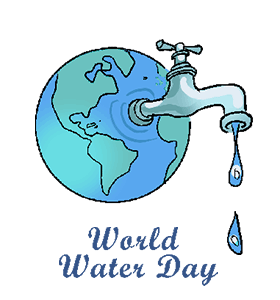
World Water Day 2019 on March 22nd


What is World Water Day?  World Water Day serves to raise awareness about water issues such as sanitation problems and water shortages in many parts of the world today.

What can we do in our classrooms to foster this awareness among our students?

I would suggest spending at least a session to watch the following video and reflect on this serious issue:


While  students are watching the video, you can ask them to take notes using this Cornell note-taking template.

If you wish to develop a gap-fill activity, click here.

You can access the complete video transcript from this link.

In any of the choices above, I would start by pre-teaching vocabulary.  First, you can create a word cloud with the essential words and interact with students to see if they know the words. This is a word cloud I have created. If students need further  help and you want to provide them with  definitions of the words, you can use this worksheet I have prepared. 

After working on the essential vocabulary as we described above, you can ask students to work in pairs and retell the content of the video using at least  5  key  words from the list. Finally, some pairs would read their versions of the story  aloud to their peers. By doing this final activity students will be developing their listening and speaking skills as they are used in real-life, that is, combining them as speakers of a language do. 

abpi resources for Science/Biology/Chemistry/PSHE, Citizenship and Physics


 This site  is supported by the Association of the British Pharmaceutical Industry. It provides teachers and students with high quality, free, curriculum-related, interactive resources containing animations and diagrams which can be downloaded as long as you accept their terms and conditions, which involve using the resources for educational purposes in the original form they are downloaded. Fair enough, I reckon.  

In order to see the topics you may find, you should visit the  list you can access from here . As you can notice, there are resources for all age ranges, from 5-year-olds  till 16+.  

The resources also include  diagrams and animations you can use in your lesson plans  by downloading them. Some topics  have additional worksheets both for teachers and students. These can all be accessed through the Download library

In the International Year of the Periodic table, may I suggest that you should try out  this great lesson plan ? 

The  resource above  includes an interactive game and so do many other topics. For instance, you can ask your students to find out about the properties of various materials by carrying out this interactive activity. 

Do you need any diagrams, posters  or animations to embed in your unit? Enter the download-library and filter the type of resource, age range and topic you are searching for. 
I am sure you will agree with me that this is a superb site so on behalf of all CLIL teachers I work with,  I would like to express our gratitude to the  Association of the British Pharmaceutical Industry  for  the high-quality resources they provide for free and, above all, for their fight against disease.

International Women's Day


In July 2010, the United Nations General Assembly created UN Women, the United Nations Entity for Gender Equality and the Empowerment of Women. In doing so, UN Member States took a historic step in accelerating the Organization’s goals on gender equality and the empowerment of women. Over many decades, the UN has made significant progress in advancing gender equality and on every March 8th they focus on a theme to keep on advancing towards achieving gender equality. 

The theme for International Women’s Day, 8 March, 2017, focuses on “Women in the Changing World of Work: Planet 50-50 by 2030”. The website is, as usual, a superb source for educators but I would like to recommend the section called "From where I stand", a collection of stories of women around the world who are bringing real change regarding gender equality.

I wanted to contribute to the celebration of March 8th in our classrooms through a lesson plan based on a film. Why? I would say that sometimes the names and deeds of the heroes in  films are known to all. However,  there are those films that shine the spotlight on those whose names were known to only a few, but whose stories deserve to be told. This is the case with "Hidden figures", which tells the story of a team of African-American women mathematicians who served a vital role in NASA during the early years of the US space program.

One of these women,  98-year-old Katherine Johnson,  is a true hero who was totally hidden until this film was released and I would like to pay my humble tribute to her and to all hidden women whose deeds should be known to all. The starting point of the lesson I have developed is Katherine's biography  but let me suggest using the uplifting Gospel song from the film as a warm-up:


If you wish, you can ask students to carry out a  fill in the gaps activity while they listen to the song. The complete version of the lyrics can be downloaded from here.

After listening to the song you will have created the environment to start this lesson plan on "Empowering Women in the changing world of work".

I hope my proposal will help your students to reflect on the need for gender equality regarding acknowledgement of work achievement. 


Downloadable resources for the lesson plan:

Handout for the student: Katherine's biography

Handout for the teacher: Katherine Johnson's biography

Handout for the student: biography writing frame

Handout for the student: feedback on peers'  presentations

Handout for the teacher: oral presentation rubrics for a biography

Handout for the student: listening activity

International Day for the elimination of violence against women November 25th 2016


Even though decades of mobilizing by civil society and women’s movements have put ending gender-based violence high on national and international agendas, not enough is done to prevent violence as we still witness  too many cases of domestic violence, sexual assault and other forms of violence. From these lines I would like to suggest some activities and lesson plans which can help us to arise awareness on the topic in our classrooms. 

The first classroom proposal  I would like to suggest is based on an empowerment song by Katy Perry called "Roar": 


You can find some activities I have developed to work on this song here. The lyrics of the song can be downloaded from this link.

My second proposal is based on the huge impact celebrities have on our students. Therefore,  we can choose some celebrities that have taken a stand and support the cause to end violence against women. You can ask them to read this handout in pairs and vote for their favourite. Then, in groups of four they will have to reach an agreement and later report to the rest of the students giving reasons for their choice. 

If you like quotations, you can make students read  the ones here , which were said by famous people belonging to different fields in life. Ask them to work in pairs and print their favourite one  on a sticky note. You can find an easy tutorial that describes how to print onto sticky notes directly from your computer. Students can then leave inspiring quotes either created by them or said by a celebrity they admire  around the school. 

If you wish to develop a deeper approach on the topic, this lesson plan  from Amnesty  International is a very good option since it offers a range of activities for use in different curriculum areas  for 11-18 year old students. 

I hope that our classroom practice on November 25th can  contribute  to a faster solution to the  social scourge of violence against women. 

MARCH 8th 2016: INTERNATIONAL WOMEN'S DAY


The 2016 theme for International Women’s Day is “Planet 50-50 by 2030: Step It Up for Gender Equality”.
The United Nations observance on 8 March will reflect on how to accelerate the 2030 Agenda, building momentum for the effective implementation of the new Sustainable Development Goals. It will equally focus on new commitments under UN Women’s Step It Up initiative, and other existing commitments on gender equality,  women’s empowerment and women’s human rights.

How can we step it up? In my view, there are very simple and effective ways in which we can help our teenagers to build the emotional skills for healthy relationships based on equality, respect and trust. Allow me to contribute by sharing with you a  simple lesson plan that you can carry out based on The Hunger Games. 

I hope that by incorporating activities that foster  classroom discussion on the topic, you will succeed at  raising students' awareness of the fact that everyone has a role to play to make gender equality a true reality by 2030.


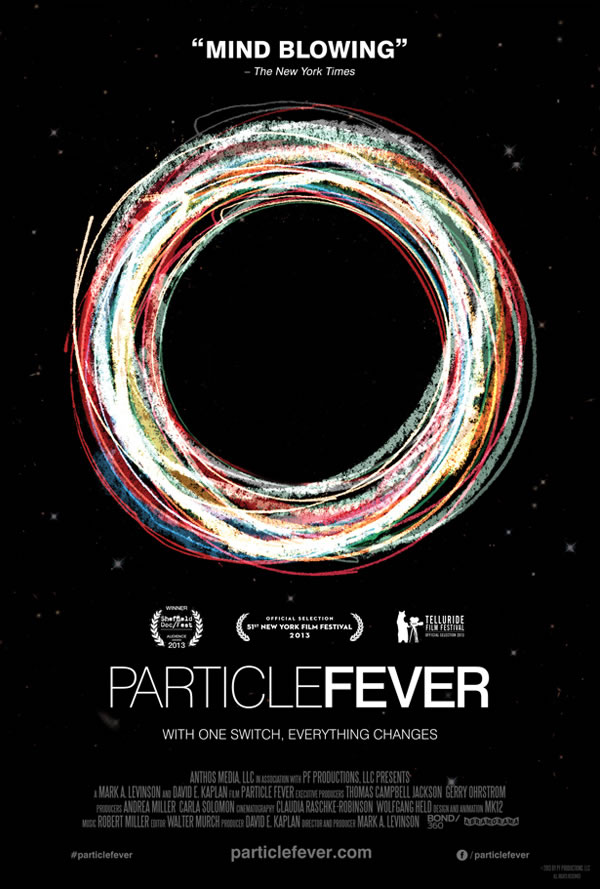
PARTICLE FEVER: A DOCUMENTARY FILM FOR EDUCATIONAL PURPOSES


Particle fever (2014) is a fascinating documentary film that follows six scientists working to see if the Large Hadron Collider (LHC) at 
CERN will produce evidence of the Higgs boson, commonly referred to as the "God particle." Although safe for all ages, the subject matter of Particle Fever makes this movie most appropriate for high school students and older. The science presented is top-notch, with complicated physics explained in language that everyone should be able to understand.


Why am I writing about this documentary in my CLIL blog today? Well, I reckon that this documentary conveys in a superb way the passion of some researchers for Science but also the honest attitudes one can adopt to grasp knowledge of our world.  Therefore, I would say that we can make use of this documentary in several subjects: Technology, Maths, Physics, Philosophy or Citizenship. You can follow the official trailer below these lines: 


 If you like the proposal, let me just help a bit with some study questions. You can find them here.

International Day for the Elimination of Violence against Women. November 25 2015


Prevention is the 2015 theme  of the International Day for the Elimination of violence against women  on 25 November and of the UNiTE to End Violence against Women Campaign’s 16 days call for action. You can see more at: www.unwomen.org. The United Nations Secretary-General’s Campaign UNiTE to End Violence against Women invites you to "Orange the world: end violence against women and girls".  We have sixteen days (since November 25th till December 10th) to collaborate by using the toolkit and sharing our photos, messages and videos showing how we can  orange our world at facebook.com using #orangetheworld.

I would  also like to tell you about  www.plan-uk.org,  a webpage with plenty of resources  that you can use to raise students' awareness of the need to fight for a world in which girls and women can live safe from violence, go to school without fear, marry who they want and have their voices heard.

As I  focus my councelling in school contexts and as most of my readers work in school contexts too, I have chosen a resource that fosters reflection on  how violence  against girls can take place  in or around schools. You can find it here

The following video can serve as a starting point:


My humble contribution to this campaign of prevention outlined above can very well include a song because I cannot agree more with Hans Christian Andersen when he said that  "where words fail, music speaks".  On this occasion, my choice is "Try", by American singer Colbie Caillat. I consider this is an empowering  song because I believe that the best prevention starts by making young girls understand that they do not have to be someone else in order to make others happy. The lyrics convey this message very effectively. I hope your students will enjoy the song as much as I do. If you wish, you can carry out  an activity on it. 

World Water Day 2015 on March 22nd


World Water Day is March 22nd — a day when the world turns its attention towards the 750 million people who lack access to safe water.  From these lines, I would like to contribute to raising awareness of the importance of this issue among our students.  
The following video can be a nice starting point:


The British Council website offers a very complete range of activities that you can carry out after watching the video. You can access them here. You will find both on-line ("check for understanding: multiple choice and gap fil") and off-line activities ("worksheets and downloads").

Really moving stories that describe the drama millions of people are going through can be found on water.org. Since co-founded by Matt Damon and Gary White in  in 1990, water.org has helped hundreds of communities in Africa, Asia, Latin America, and the Caribbean gain access to safe water and sanitation.
You can also make students listen to the following interview with Matt Damon about the water crisis in 2010:


A wide variety of resources is offered by the United Nations website.  Logos and posters in many different languages can be downloaded from here.

Finally, a very practical ready-to-print lesson plan is offered, as usual, by ESL Holiday Lessons. You can work on this plan and students are bound to learn lots of language while they also get a glimpse of the crisis affecting one of the most precious resources we possess. 

International Women's Day 2015


20 years have passed since 17,000 participants and 30,000 activists streamed into Beijing for the opening of the Fourth World Conference on Women in September 1995.They were remarkably diverse, coming from around the globe, but they had a single purpose in mind: gender equality and the empowerment of all women, everywhere. By the time the conference closed, it had produced the Beijing Declaration and Platform for Action, the most progressive blueprint ever for advancing women’s rights. As a defining framework for change, the Platform for Action made comprehensive commitments under 12 critical areas of concern. Even 20 years later, it remains a powerful source of guidance and inspiration.

The following video can be an excellent introduction to a series of sessions to celebrate International Women's Day 2015:


After viewing this video, you can proceed with a text on International Women's Day and some activities on it. Choose the ones that best fit your school context  from the lesson plan you can get here.

If you have the chance to spend some sessions on the topic, this is a nice webquest on "Important women in the world". It is aimed at making students aware of the important work different women belonging to different work areas have carried out. You can adapt it and include other women if you think other choices may be more successful with your students. 

For those of you who share my passion for music as a means to create the proper atmosphere and convey powerful messages,  I have two proposals: the first one is Gloria Gaynor's "I will survive". Even though it was released in 1978, it has remained a true pop music anthem that highlights women's strength. You can download the lyrics here  and this is a worksheet you can use with your students.

My  second proposal is "A woman's worth". This was Alicia Key's second single. In this song, she wrote about self-esteem, and being worthy of the kindness of others. Keys feels it can relate to a man or a woman  so I reckon it is  very suitable for our students  because they can  listen to a song that describes what good relations should be like.

The video was shot in Brooklyn, near where she grew up:


The lyrics of the song offer a great opportunity to convey the powerful message of relations based on respect and equality. Precisely because the message is so powerful, I decided to forget about grammar objectives such as the first conditional or modal verbs and to offer students some activities which would enable them to fully understand the meaning of words and sentences in the song. That's why I developed  this worksheet

I hope that the proposals above will contribute to step up our efforts to foster gender equality in our classes  


A lesson plan on Globalization


A new year has just begun and I know that all of us are eager to fill it in with new hopes, projects and illusion in our personal and professional environments. 
My humble contribution at the start of this year will be a lesson plan I have developed for Secondary 3 and 4 level students on the topic of Globalization.

Although this topic can be included  both in Geography and Citizenship content areas,  I reckon that the proposal I offer might be just  an introduction to the topic in a Geography class but a complete sequence in Citizenship. 

CLIL  practice is much more effective when coordination between the language teacher and the subject teacher takes place so this lesson plan would work much better if this coordination took place and the English language teacher could present the basic  vocabulary and language  (mainly contrast clauses, language for expressing opinions and language  and structure of an opinion essay)

In case coordination between the subject teacher and the English  language teacher is not possible,  I have added some language support for the students and for the subject teacher who  might need it.

Regarding the focus on language, I have tried to choose some activities that help students with differences that are basic in any content area and not only in Citizenship or  Geography: language that is used to express facts versus language that is used to express opinions, language that  shows certainty and language that shows uncertainty; language that conveys caution; language for generalizations; language for contrast.

You can read the whole lesson plan and find all handouts for you and for the students here.

I hope you will find my proposal useful. We will talk about it in our next seminar session together.


International Day for Human Rights on December 10th

Amnesty International is a global movement of more than 7 million people who campaign for a world where human rights are enjoyed by all.  The website displays  lots of resources for the classroom in different languages but today I would like to recommend a  human rights cross-curricular teaching resource for secondary schools. It contains eight lesson plans  which  can be used separately or as part of  a series of carefully planned sessions  across the year. The accompanying CD-ROM contains all the resources together with short film clips and accompanying resources, which you can also order by filling in this form .
Right below you can find a short summary of each of the lesson plans and the links to access them:  
  •  Lesson 1 - Understanding human rights: Introducing human rights with images, activities and a short film
  • Lesson 2 - Human rights in the UK: Making the Human Rights Act come alive with real-life cases and a presentation activity
  • Lesson 3 - Dying to give birth: Using key mathematical skills to assess maternal mortality in different countries
  • Lesson 4 - Mi dia, y los derechos: Comparing the daily lives of students in the UK with young Spanish-speakers across the globe
  • Lesson 5 - Freedom of expression: Exploring the right to free speech through film and text using key communication and critical thinking skills
  • Lesson 6 - Refugees and asylum: Dramatic role play activity using a tru story to understand and empathise with asylum seekers and refugees
  • Lesson 7 - The death penalty: Discussion and debate about the death penalty using global facts and a real case
  • Lesson 8 - Taking action: A short film case study giving real-life context for developing campaigning skills.
The lessons plans provide you with power point presentations, resource sheets, video clips and teachers' notes. All of these resources can be downloaded for free and  you can also order the whole pack of lesson plans  by filling in this form.

Plenty of interesting topics  for you classroom in English, French and Spanish  may be found under the title "Thematic issues" on the United Nations website. Do not miss the special section they have prepared for  International Human Rights Day on December 10th

Last but not least, if you wish to work on language thoroughly, you will have a great opportunity to do so by downloading the lesson plan ESL Holiday Lessons offers here.


International Day for Elimination of Violence against Women


International Day for the Elimination of Violence Against Women is observed on November 25th because of a horrific historical event. On this day in 1960, three sisters were brutally killed in the Dominican Republic. The Mirabal sisters were political activists. They campaigned against Rafael Trujillo's dictatorship. Their brutal execution triggered the anti-Trujillo movement and within a year the Trujillo dicatorship came to an end. The sisters were referred to as the "Unforgettable Butterflies" and they have become a symbol against victimization of women. 

To raise awareness and trigger action to end the global scourge of violence against women and girls, the UN proposes 16 Days of Activism against gender Violence. Enter the UN website and choose among the many proposals the ones you find the most suitable for your students. 

A good way of starting could be this quiz to test your students' knowledge on this issue.

"In the words of"  is also a very interesting reading proposal because it features first-person articles written by celebrities, well-known personalities and women's wights activists. 

Last but not least, I reckon that  boys  could benefit from knowing about the heforshe campaign that was born to underline the role of  so many men who in recent years have started to stand up in addressing inequalities and discrimination faced by women.  Emma Watson's speech at the  UN Headquarters can be an excellent resource  to raise awareness of the need for boys and men's collaboration to fight gender inequality:


You can find the script of her speech here.

Finally, if you want a ready-to-use lesson plan that helps you to work on language while developing this topic, do not miss the proposal taken  from 
a great website with many lesson plans.  I have  downloaded it for you  so you can access it from here.

I hope that the ideas I have laid out above enable all of  us  to make our students  reflect upon the causes and consequences of gender inequality and, above all, teach them to respect the value of gender equality so that they are able to know a different reality in a near future.


SAFETY ON THE INTERNET

Cyberbullying, sexting, grooming are  starting to get into our dictionaries because unfortunately traditional bullying has evolved into a new way of humiliating  or harassing kids and teenagers. Cyberbullying means that someone  may be harassed  by someone else hiding behind his or her cell phone or computer screen.  I reckon that our role as teachers must include setting out clear standards of behaviour when they use the Internet, social networking sites and mobile phones. 

An example of a classroom practice that can help to  make our students aware of the dangers of the net is this sequence by Pilar Torres, a Secondary English teacher from Angel de Saavedra High School in Córdoba.  In this project, students listen, speak and write in English about computers, social networks and internet safety. Regarding language, they will learn the vocabulary related to the topics mentioned before and they will be provided with  a very meaningful context to use the modal verb "should" to give advice  to their peers.

The final outcome of the project is a digital poster that includes advice on internet safety and a very useful rubric to assess both the format and the content  in the poster is suggested by Pilar.

Some other related resources may be:


Digizen website


Digital citizenship or how to use technologies in a responsible and safe way


Our students are very familiar with the use of technologies but they need a bit of help from parents and educators on how to become responsible digital citizens. That is why today I would like to recommend a website which shares very good advice and resources on issues such as social networking and cyberbullying  and how these affect their own and other people's online experiences and behaviours.   Enter here to see how many practical proposals for the classroom you can find. 

There are plenty of resources  that will be helpful for classroom purposes but I would like to remark on the video proposal you can use to deal with the complex issue of cyberbullying.  Character interviews as well as question worksheets are provided here