Showing posts with label music. Show all posts

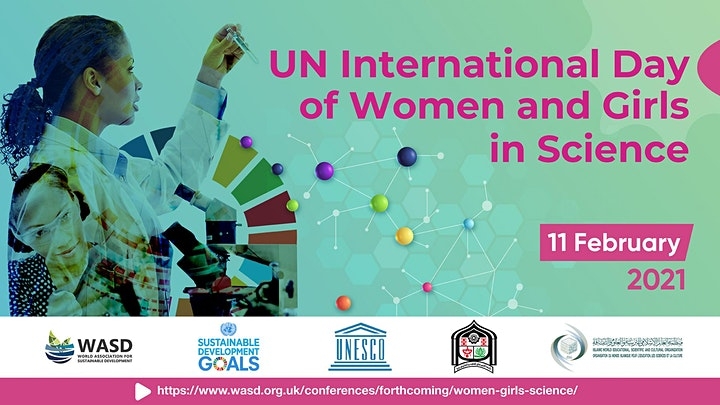
International Day of Women and Girls in Science, 11 February


On the International Day of Women and Girls in Science, let's do our best as educators to address and transform the existing gender gap: at present, less than 30 per cent of researchers worldwide are women. According to UNESCO data , only around 30 per cent of all female students select STEM-related fields in higher education. Globally, female students’ enrolment is particularly low in ICT (3 per cent), Natural Science, Mathematics and Statistics (5 per cent) and in Engineering, manufacturing and construction (8 per cent).

 From these lines, I will try to help teachers who read me by offering several  classroom proposals:


  •  In the Autumn of 2019, The Hastings Academy and Robsack Wood Academy worked on songs about Women Scientists. Songwriter Anna Page worked together with students and they created some inspiring  compositions.  Among them, there is a song that has touched my heart. It is  called "Women who were scientists" and I would say that it  conveys a very powerful message. If you want to know why, listen to the audio file and analyze   the lyrics  . I suggest that  students should  listen to the song and get familiar with the rhythm pattern.  Then,  you could  ask students   to work in pairs and  write a stanza about another famous woman who was forgotten till now.  


  • The play "Women scientists: past, present and future" was premiered in March 2016 at the University of Seville.  Although it is in Spanish, they have kindly provided us with a comica  didactical guide  and a quiz.           


  • Last but not least, making women visible site  is a collaborative project in four languages which offers a wide variety of activities in order to help teachers to foster women's visibility at our schools. Among the inspiring proposals they offer, I would highlight  a video game and  a card game. 


Once again, thank you very much for the great effort you make in order to let  our students  be aware of the need to bridge the gender gap. Please,  write to me through the comment section on this blog so that I can know about your students' reactions to the proposal you choose to celebrate February 11th. 

Europeana platform, Europe's digital platform for cultural heritage


Today I am writing to let you know about a very powerful platform called Europeana
Europeana is Europe's digital platform for cultural heritage. It provides free, online access to over 50 million digital records coming from over 3,700 libraries, museums, archives and galleries across Europe. Europeana features art from over 3,000 institutions across Europe, from the likes of Rijksmuseum, the British Library and the Louvre, as well as local museums from every corner of the European Union. Highlights include Mona Lisa by Leonardo da Vinci, and music by Wolfgang Amadeus Mozart. Undoubtedly, a very helpful source for those teachers implementing Art both at Primary and Secondary levels. Click here to see the Art-Europeana collection.

Europeana offers a Music collection which includes recordings, pieces of sheet music and other music items from across Europe so Music teachers will benefit from this platform too.

Teachers who wish to introduce Natural History content in their Science classes 
will have the opportunity to explore the natural world in 3,415,528 drawings, specimens, images and documents in the Natural History collection.

211,249 items on the topic of migration to, from and within Europe are thoroughly depicted in the Migration Collection. 

I am sure this platform founded by the European Commisssion in 2008 and updated with new features including a translation tool into 27 languages will enable you  to enrich your classes.

ART AND MUSIC

Encourage your pupils to develop their creativity by listening to music they like and creating a work of art to represent how it makes them feel with this activity from Tate Kids.


The Idea:

Different types of music can create different responses. Responses to music can be made through drawing, painting, 3D sculpture, movement, dance, story, poetry, photography, slide projection and video. You can probably think of others, too. The idea here is to show how the music inspires you. Your work will show how music makes you feel, what it makes you think of and what you can create from what you hear.
 The Plan:
You are going to respond to your chosen piece of music by creating a sculpture known as a 3D kinetic (that means movement) sculpture-drawing. This means you will respond by creating a sculpture that represents the way the music makes you feel.
  You Need:
  • A selection of any bits and pieces you can find, including lolly sticks and different sized and coloured pieces of paper.
  • String, wool or ribbon, so you can make a music sculpture mobile if you wish.
  • Scissors, sticky tape, glue.
  • A hook - if you want to hang your mobile up.
  • Your chosen piece of music or sounds.
  

Do it!

  • Listen carefully to your music and think about how the music moves.
  • Does it make big swooshing shapes? Does it make small, quiet movements or is it jerky and repetitive? Perhaps it sounds like it is creeping along the floor? Or is it more like it is flying and swirling through the air.
  • You might find yourself moving to the music. That’s good – dance if you want to.
  • Now you are ready to make your 3D sculpture by choosing bits and pieces that represent the feel of your music. For example a curled waving piece of paper might move in a whirly, swirling way or a collection of lolly sticks might clink against each other in a jerky, clicky way.
  • Hang your sculpture up like a mobile so it can rotate and move freely.
 Top Tips:
  • Think about how the sounds fit together and move. Then try to make your 3D sculpture move in a similar way.
  • Try different ways of responding to other pieces of music or sounds.
  • You might enjoy just working with a sound effects CD.
  • You could make a response to the natural sounds around you – go into the country, into the city or by the sea if that is possible.

See it: 


International Women's Day 2015


20 years have passed since 17,000 participants and 30,000 activists streamed into Beijing for the opening of the Fourth World Conference on Women in September 1995.They were remarkably diverse, coming from around the globe, but they had a single purpose in mind: gender equality and the empowerment of all women, everywhere. By the time the conference closed, it had produced the Beijing Declaration and Platform for Action, the most progressive blueprint ever for advancing women’s rights. As a defining framework for change, the Platform for Action made comprehensive commitments under 12 critical areas of concern. Even 20 years later, it remains a powerful source of guidance and inspiration.

The following video can be an excellent introduction to a series of sessions to celebrate International Women's Day 2015:


After viewing this video, you can proceed with a text on International Women's Day and some activities on it. Choose the ones that best fit your school context  from the lesson plan you can get here.

If you have the chance to spend some sessions on the topic, this is a nice webquest on "Important women in the world". It is aimed at making students aware of the important work different women belonging to different work areas have carried out. You can adapt it and include other women if you think other choices may be more successful with your students. 

For those of you who share my passion for music as a means to create the proper atmosphere and convey powerful messages,  I have two proposals: the first one is Gloria Gaynor's "I will survive". Even though it was released in 1978, it has remained a true pop music anthem that highlights women's strength. You can download the lyrics here  and this is a worksheet you can use with your students.

My  second proposal is "A woman's worth". This was Alicia Key's second single. In this song, she wrote about self-esteem, and being worthy of the kindness of others. Keys feels it can relate to a man or a woman  so I reckon it is  very suitable for our students  because they can  listen to a song that describes what good relations should be like.

The video was shot in Brooklyn, near where she grew up:


The lyrics of the song offer a great opportunity to convey the powerful message of relations based on respect and equality. Precisely because the message is so powerful, I decided to forget about grammar objectives such as the first conditional or modal verbs and to offer students some activities which would enable them to fully understand the meaning of words and sentences in the song. That's why I developed  this worksheet

I hope that the proposals above will contribute to step up our efforts to foster gender equality in our classes  


A TEXT FROM A CLIL MUSIC LESSON AS AN EXAMPLE OF COORDINATION BETWEEN THE LANGUAGE TEACHER AND THE SUBJECT TEACHER


Nowadays, all CLIL practitioners can get material for their content areas from a variety of sources, such as the Internet or from coursebooks. However, on many occasions materials have to be adapted so as to make them easier for students. I have written other entries on this blog on the convenience of providing students with visual scaffolding so today I would like to give some clues on how to make content in a Music lesson easier for students without diminishing the amount of content-obligatory language.
  
Content-obligatory language could be defined as the language needed for subject matter mastery in the mainstream classroom. This language consists of words, structures, collocations  and functions which are essential for the topic they are studying.

CLIL students will also need content-compatible language, i.e. the everyday kind of language which is useful for both the study of a specific topic and for general use  (verbs like blow, hit, play which will be useful in a Music lesson but also in everyday situations)
   
I have mentioned the word language twice so it is important to stop at this point to clarify that the  CLIL teacher focuses on language only in the sense of enhancing the effectiveness of this role; he or she should not spend his/her time  explaining the difference between the past simple and present perfect. That is precisely why coordination between language and subject teachers is essential in order to identify language problems in the topic in advance so that they can be dealt with effectively.

Let’s focus on a text that can be part of a Music lesson on the orchestra (string instruments) and see how we could make it easier for students while respecting the necessary amount of content-obligatory language.  This is my proposal.


MOTIVATING SECONDARY STUDENTS TO LEARN ENGLISH THROUGH MUSIC AND ICT


PopuLLar is a European Union- funded, innovative, education project designed to harness music, the primary social interest of secondary school students, into their language learning. 
There is a huge need to motivate secondary school students, in particular, to learn languages, focus digital competences and be creative; and music is the key.

The project will ask students to write their own lyrics to songs of their choice. They will then translate their songs into the target language they are learning, The students will then record their song (audio or video) and share it with students all over Europe. 

Students will be able to combine their love of music, with creativity, literacy, digital competencies, group collaboration and, most importantly, use foreign languages. 

PopuLLar is a project that is 'owned' by the students, they work autonomously and collaboratively, teachers are guides to the project process.

As at this stage of the academic year I know  you are awfully busy, now you can just enter here to find a good summary of the main features of the project.

As for registration, it  should be done before July by filling in this  simple questionnaire 


Last but not least, I would like to wish you all the best for your  well-deserved summer break. Thank you very much for your enthusiasm and active participation in our CLIL seminar in Getxo. We will meet again in October  so as to go through the steps that will help us to work on this project and also to plan our CLIL schedule for 2013-2014. 


CLIL resources from our colleagues


Here you are two wikis where you may get information, resources and ideas for Music and European Culture for DBH Students:


From here I would like to thank the teachers at Uribarri High School who have created these sites for sharing their work with all of us. They are using these wikis with their students following a CLIL methodology so their experience may be very very useful for all of us interested in CLIL.

Music in English


Here you have Mª Jesús Camino Rentería's blog. There you'll be able to get activities and good ideas to help students improve their musical skills in English.

Music: the unspoken word


No matter what your age, nationality or social status are, music reaches deep inside all of us. It evokes feelings, memories and emotions. Therefore, no one wants to miss the experience and students are not the exception. So, why don't you make the most of the highly motivating power of music in your classes?
The site we propose will help your students to develop a higher understanding of music. It contains video interviews with worldwide known musicians, a research assistant, competitive quizzes and a wide range of content.

Click here to check it out.

Arts Alive

Click on the picture to visit this Canadian site where lots of ideas and resources may be found to work on drama, music and dance.