Showing posts with label vocabulary acquisition. Show all posts

DICTIONARIES FOR LEARNERS USING ENGLISH TO STUDY OTHER SUBJECTS


Our second seminar session will take place on November 16th and we will try to  give a clear insight into the most useful ways to make students acquire subject-specific vocabulary. Right now,  I would like to share this list of online dictionaries with all CLIL teachers and I would also like to let you know about the  fourth edition of  Oxford Student's Dictionary.  This dictionary is aimed at intermediate to advanced learners of English. It has a particular focus on curricular vocabulary and includes the words you need to study other subjects such as Art, Computing, Science, Geography, History, Literature, Maths, Sport and much more.


You can access the curricular videos and 360-degree interactive images that accompany the dictionary on this page.

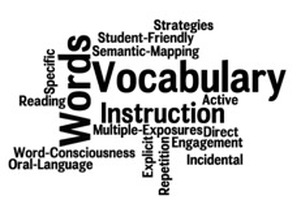
Using dictionaries is an essential part of the process when we talk about vocabulary instructional strategies. However, providing a description or an explanation of the term is only the first step of the process. It goes beyond the scope of a blog entry to analyze such a process so we can  recap by saying that  reading and instruction on subject-specific vocabulary are the key to overcoming students' difficulties with academic content.   This is easy to say but how can it be done? Fortunately, there is  what could be called  "a toolbox of vocabulary strategies " that work and you will be provided with them throughout  our  seminar sessions.  



Looking forward to meeting you online on November 16th.


Making input comprehensible in CLIL classrooms


As I wrote in previous entries on this blog, there is no doubt that explicit vocabulary instruction is a must in order to succeed at making our students acquire subject-specific vocabulary. The best  results regarding the use of classroom  strategies that facilitate vocabulary acquisition will undoubtedly occur when language teachers and  content area teachers work together. In our next seminar session, which will take place on November 6th, we will talk about your specific schools and the possibility of working as a team .

Right now, I would like to mention four  of  the strategies that any teacher can put into practice and be sure that, if done repeatedly, will have a positive impact on the amount of vocabulary our students acquire:

1)  Keep vocabulary notebooks made up of word maps organized by units.  We will see several examples. This is one for Maths. 

2) Visualize the key  words and concepts which are essential in the unit you are teaching.  Do you know about wordsift? It is a very useful tool both for teachers and students. We will analyze its features together. 

2)  Use charts and tables when students are learning new terms and concepts in your content areas. This simple strategy requires very little preparation and works in all content areas. You can find an example for a Science class here

3)  Teach  students how  to pay utmost attention so as to  find context clues that help them to guess the meaning of new terms and concepts. Needless to say that context clues are not always effective to determine word meanings when we are talking about content-specific  academic vocabulary but we need to train students for the occasions when context clues do help. These context clues can be provided by the author in 8 different ways! Would you like to know which ones?

4) Use "Word attack" strategies. Do you like the name?  It sounds promising, doesn't it? Would you like to know a bit more about this strategy? 


I hope you answered "yes" to the questions above and I promise to provide you with the answers in our seminar session on November 6th. 

Happy All Saints' Day to all of you.


Identifying the level of difficulty of texts in any content area


Today I am writing this brief post to let you know about a tool that allows users  to obtain reliable research-based information on the lexical composition and level of any text, to help them make key decisions about their text's difficulty and its overall level in relation to the CEFR. The tool is called TextInspector and it was the  winner of the 2017 ELTons award for Digital Innovation. 

You can find it here and also included on the English Profile website, which offers another   two online tools:  English Vocabulary Profile Online and English Grammar Profile Online. We have already  talked about the usefulness of these two tools in previous seminar sessions and many of you have experienced  that  they are very helpful for  both  language  and  subject classes.

Textinspector is very easy to use: simply paste any text into the box and click on "analyse". It will give you an instant score and detailed feedback. 

Texts are limited to 500 words per document. To process larger documents and to save your data, please use the advanced site at www.textinspector.com (subscription required).

To sum up, Textinspector is another powerful tool that will enable teachers  to succeed at providing their students with comprehensible input by helping them  to identify the amount of vocabulary they have to pre-teach according to the language level of our students. For CLIL teachers, the tool will allow them to have a clear perspective on the difficulty of the text on the whole although it is obvious that they will need to focus on the  subject-specific vocabulary which is essential for their CLIL units. 

VOCABULARY INSTRUCTION IN CONTENT AREAS


The role vocabulary plays in reading and content area lessons is not the same. In fact,  there are important differences between the two.  For example, the words temerity and fulcrum in a novel do not relate to each other. Therefore, understanding the meaning of one and not the other in the book has little impact on the readers’ comprehension of the entire text.

However, in a content area, words are related to concepts and are often related among themselves. Take for instance the words atom, neutrons, protons, nucleus and electrons. These words are necessary to know in order to understand the concept of an electron cloud. Therefore, students need a thorough understanding of content vocabulary because these words are labels for important concepts. Acquisition of  the meanings of these words is necessary in order to learn further concepts.

Furthermore, the word nucleus in Chemistry is different from the word’s definition in Biology. This is because each discipline has its own language or technical vocabulary that students must learn in order to comprehend specific content-area information.

Another  essential consideration is that content vocabulary consists of many low-frequency words that do not appear in other contexts.

All the differences mentioned above leave no doubt that  a  different approach to vocabulary instruction in  content areas is needed, mainly  one which enables students to integrate  new terms with what they already know. Apart form this, vocabulary instruction in content areas has to ensure that new terms are  taught and retaught in multiple contexts and allow students  to use these  new terms in ways that are meaningful to them as often as possible.

Content area teachers can get considerable help from language teachers if they provide them with information about the vocabulary  strategies that work in their English language classes, so I suggest that English language teachers should carry out a simple survey among students so as to make them aware of  the vocabulary strategies they are using and  the need to use some they are still not familar with.

Experts on strategies that lead to effective acquisition of the subject-specific vocabulary have to be known by content area teachers:   Keith Kelly provides us with excellent resources so as to work on vocabulary in Science and Geography in three different stages:

- Working with words

- Working with sentences

- Working with texts


For those of you who wish to have a bank of basic vocabulary  strategies that can be used in any content area, this file can be very useful. I will try to show you how you can adapt them to your specific subjects in our next session together on February 10th. 


A world of words


Researchers over more than seven decades have found a strong correlation between vocabulary  knowledge and academic performance. Although they have used different definitions and different assessment methods, they have achieved wide agreement on the issue: the more words students know, the higher their level of reading comprehension; and the higher their level of reading comprehension, the higher their level of academic achievement.

Which words are important?

When students start learning a foreign language, they need to learn the most high-frequency words in order to begin communicating.
Most high-frequency words in English are Anglo-Saxon in origin: for example, big, little, boy, girl, book, mother, father, see, look, go, jump, sleep, in, on, a, the, then. Even the earliest children's  picture books assume an oral understanding of these words. Teachers also use these words to explain academic terms that may be new to all the students in the class. This is a good approach as long as all students understand the basic vocabulary that the teacher is using  to give definitions and explanations.

For success in school, students also need to learn many thousands of low-frequency words. These  words, mostly derived from Latin, are found in books and in more formal oral discourse,
such as lectures and presentations, teacher talk and documentary video.
They can be classified as follows:

-  General academic words – mostly Latin-based words such as observe or accurate. Abstract
nouns such as observation or accuracy become increasingly important.

- Subject-specific words – in common use in a specific subject (e.g., diameter, integer or  denominator in Mathematics). These words need to be taught as they arise within the  context of the subject. Some subject-specific words are common words that have a special  meaning in the subject area (e.g., mass, power, product or volume). Even the word and can have a special meaning in Mathematics (plus).

-  Highly specialized, technical or literary vocabulary – almost always explained in context, and
may never be encountered again in a lifetime, depending on the subjects the student  chooses to study in the senior grades or in postsecondary education

Now the next  question would be: what can teachers in a CLIL context do? Fortunately, direct vocabulary instruction has been proved to strengthen students’ skills in learning words in an impressive way. This should encourage every teacher to develop intentional, direct vocabulary instruction because by doing so he/she will sharpen students’ skills in learning words on their own, increase  reading comprehension levels and, consequently, improve their writing skills.

Therefore, on March 27th we will focus our seminar session on some Word-Learning Strategies which will help students become independent  word learners.

CALP in the classroom. Academic vocabulary

Source: Boaz Yiftach http://www.freedigitalphotos.net/images/view_photog.php?photogid=1408


Enhancing  students’ Cognitive Academic Language Proficiency is a fascinating  task though not an easy one. Although it is supposed that students at  Secondary Education  have been exposed to this type of language for many years, it comes as a surprise that they return written assignments using poor and basic vocabulary. It is time to expand their vocabulary and help them build up appropriate discourse.

This  site will help you to  expand your  students' academic vocabulary using the Academic Word List (AWL). All students need to learn general academic vocabulary, words such as: feature, illustrate, regulate, strategy.  By learning this core academic vocabulary,  they will improve their  comprehension of academic texts. It will also help them to write assignments in an academic style.