Showing posts with label Critical thinking. Show all posts

INTERNATIONAL WOMEN'S DAY 2022


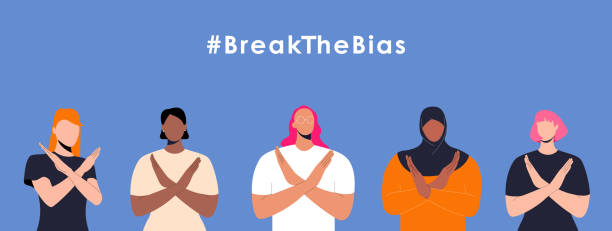
International Women's Day (IWD) is an annual global campaign marked on 8 March that celebrates the social, economic, cultural, and political achievements of women. The day also marks a call to action for accelerating women's equality. Each year the IWD campaign has a new theme, and in 2022 the theme will be #BreakTheBias. The following lines can be read on  every  IWD platform as an introduction to the topic:


Imagine a gender equal world.

A world free of bias, stereotypes, and discrimination.

A world that is diverse, equitable, and inclusive.

A world where difference is valued and celebrated.

Together we can forge women's equality.

Collectively we can all #BreakTheBias.

Individually, we're all responsible for our own thoughts and actions - all day, every day.

We can break the bias in our communities.

We can break the bias in our workplaces.

We can break the bias in our schools, colleges and universities.

Together, we can all break the bias - on International Women's Day (IWD) and beyond.


How can we collaborate to break the bias? You  and your students can take part in the campaign proposed by IWD 2022 Partners in many different ways.  Have a look at the different options  here


Do you need any downloadable resources for your classroom? I hope these wil be helpful for you:


Resources for the Primary classroom:


  • OXFAM resources : these activities can easily be adapted to suit the needs of younger and older students. 
  • Play with these Classroom Activity cards: use them  to engage children  in activities and conversations that foster an inclusive mindset. Apart from using the ones provided, invite your  students to add their own IWD activity for friends and/or family. Then, share them with students from other classrooms, place them on the school walls and upload them onto the school website.

Resources for both Primary and Secondary classrooms:


 The World Association of Girl Guides and Girl Scouts  has  released an  impactful  resource. There are three categories of activities within the pack:

  • Understanding Gender: exploring gender roles and stereotypes.
  • Women’s rights are Human Rights: exploring the concept of rights and why they are important.
  • Gender & Climate Change: exploring how climate change disproportionately affects women and girls.

The pack materials are aimed at children aged:

  • between 6 - 11 years
  • between 12 - 15 years
  • 15 years and above
You can download the pack here. 


Resources for the Secondary classroom: 


Global Dimension platform provides educators with a wide variety of resources on IWD: 

- Global Learning Programme Resources for Science teachers at Secondary level can be downloaded from here

- You will find Gobal Learning Programme Resources to develop Literacy  here.   The proposals will be specially useful if you teach Language, Global Issues, PSHE or Ethical Values. For those of you who are working on the reading plan, the last activity focuses on a proposal which students will carry out in  the library of the school. It can be used in any language. 

-  If you teach History, this is your pack of resources to celebrate IWD. 

- Math teachers will find some ideas here .


   Let's break the bias together! 

DEVELOPING CRITICAL THINKING THROUGH CLIL


Today I would like to focus my post on critical thinking skills in any content area. By now all of you know that I am a firm believer in the importance of  appropriate classroom  questions. Following critical thinking essentials,  I will try to show you some powerful evidence to support my belief. In order to do this, I will  share the outcomes of a recent research entitled " Effective questioning in CLIL classrooms: empowering thinking".  

The research was conducted by  Professor Rebecca Valverde.  I would like to congratulate her on this powerful research  and I highly recommend that should read it by entering this link. In short, the research aimed at determining whether stimulating higher-order thinking in CLIL classrooms  would result in a significant improvement in student outcomes. The results showed that this methodological intervention succeeded in its aim, as a marked improvement in student responses was achieved. These findings highlight the value of optimizing the use of questions to foster critical thinking and empower students for the knowledge economy in which we live.

Rebecca's reader-friendly paper includes a wide range of examples for  students aged 9 and 10 years old. I reckon that you will be able to adapt them to fit your Secondary classroom contexts  but I have written this worksheet with some examples for different content areas at Secondary level. I hope you will find it useful. 

Last but not least, keep in mind what the greatest critical thinker said: 


THE SCIENCE OF VIRUSES


Why not visit the Exploratorium Museum in San Francisco? It is a good chance to travel virtually and use the resources from their amazing website   to help your learners explore Coronavirus and the science of viruses, see how they affect us all and also celebrate International Museum Day (18 May). The resources vary from videos, activities and articles.  There are even activities provided by science teachers.  You will be impressed by how much  your learners can discover about viruses. 


End of the year activities


Dear seminar members /readers


Our last seminar session took place last week and we talked in depth about assessment in CLIL so I am not going to write about that today.  I would  like to suggest  just 3 ideas  that you can put into practice to try and make the last month of school a memorable one. Needless to say this is my personal choice based on long-term  feedback from my  teenage students.

 Therefore, I hope these proposals will be effective and memorable  for your students  too, regardless your content area. Here are my 3 favourite end of the year activities:


Make a Class Video: 

Use pictures taken throughout the year to make a video. Ask  students to add captions and music. Add in live footage of students talking about their favorite parts of the lesson.

Ask students to write letters to your future students. 

Have your current students write letters of advice for the new students you will teach next year. What advice would they give on how to “survive” or do well in your classroom? What are the hardest parts of the course?  If you have any special activities you don’t want students to spoil, make sure to tell them ahead of time.

Help students to reflect on their learning process by asking them some reflection questions:
  
  1. What is something we did this year  that you think you will remember because it is meaningful to you ?
  2. What is something you accomplished this year that you are proud of?
  3. What was the most helpful  thing someone in our class did for you this year?
  4. What was the most challenging part of this subject  for you?
  5. What is something the teacher could have done to make this year better?
Last but not least, would you like to take the survey "How CLIL are you?"   you took when we started working together in October 2018? I am sure you will be very proud of your accomplishments. 

It was an honor and a privilege to work with you so as to make the most of our CLIL practice in our schools. 


Wishing you all a fabulous summer break and looking forward to meeting you all again in September 2019.

World Water Day 2019 on March 22nd


What is World Water Day?  World Water Day serves to raise awareness about water issues such as sanitation problems and water shortages in many parts of the world today.

What can we do in our classrooms to foster this awareness among our students?

I would suggest spending at least a session to watch the following video and reflect on this serious issue:


While  students are watching the video, you can ask them to take notes using this Cornell note-taking template.

If you wish to develop a gap-fill activity, click here.

You can access the complete video transcript from this link.

In any of the choices above, I would start by pre-teaching vocabulary.  First, you can create a word cloud with the essential words and interact with students to see if they know the words. This is a word cloud I have created. If students need further  help and you want to provide them with  definitions of the words, you can use this worksheet I have prepared. 

After working on the essential vocabulary as we described above, you can ask students to work in pairs and retell the content of the video using at least  5  key  words from the list. Finally, some pairs would read their versions of the story  aloud to their peers. By doing this final activity students will be developing their listening and speaking skills as they are used in real-life, that is, combining them as speakers of a language do. 

Developing 21st century skills in our classrooms


Nowadays, teachers are faced with the challenge of equipping students with a long list of skills: creative and critical thinking, problem-solving abilities, collaborative skills, leadership, communicative skills and digital literacies. How can we face  this challenge? I would like to suggest a couple of simple activities that will provide learners with the opportunity to develop their creativity and critical abilities by making new connections to the acquired knowledge after a virtual visit to a museum.
ACTIVITY 1: we become artists
Objectives:
Students visit a virtual exhibition of Art objects, choose their favourite one and create a video in which they describe the object to their peers and suggest new ways of using the object nowadays. This video project will enable students to  increase their competences as effective communicators with digital technologies and these skills are and will be essential in their lives.
Language level:
From B1 to C1
Resources:
Links to virtual exhibitions:
Handouts for the students:
Organization:
Group work. Students work in groups of 4/5.
Number of sessions:

4 sessions :

1 session to visit the virtual exhibition, choose their favourite Art object and write the description of the object

1 session to  prepare the video script and create the video clip (There is a wide variety of tools for creating videos. Among them, I would like to suggest Screencastify,  which  is a very good tool to create and share videos easily. It is an extension of Google Chrome which will be very appropriate for your Google Classroom contexts)

1  session to rehearse  because they need to talk in English during the videoclip. 

1 session to share their videos with their peers. (The teacher can use "Rubrics to assess students' videos during this session or watch the recorded videos later for assessment)

After this final session, I suggest sharing the videos  with the rest of the students and the families through the school blog or website. 
Skills:
Integrated skills (reading, listening, speaking and spoken interaction and writing)
ACTIVITY 2: our Art auction
Objectives:
Students create their own Art object/artifact , bring it to the classroom and prepare a short description of it for and Art Auction which will be held in the classroom.
Language level:
From B1 to C1
Resources:
Handouts for the whole process:
The same handouts for descriptions used in Activity 1 plus:
Organization:
Several choices are possible: students can create their Art object individually or in pairs. When the Art auction takes place, you will need a student who conducts it and the rest of the students will take turns to sell their objects and bid for others’ objects.
Number of sessions:
This will depend on the number of students and the number of objects but you will need at least 3 sessions (one for the creation process, another one to let students prepare their roles for the auction and the last one for the real auction).

During the auction you can assess students' oral performance by using the handout "Rubrics for oral assessment". If you choose to do this, students should take turns so that all of them act as either the auctioneer or the person who wants to sell his/her object.
Skills:
Listening, speaking and spoken interaction, writing
I hope these activities will be useful for you. I reckon we have a true challenge ahead and our students will be better equipped for their future if we foster creativity, collaboration and critical thinking in our classrooms.