Showing posts with label Competences for life. Show all posts

Developing creativity across the content areas


This  post is a follow-up of the previous one, which I wrote to highlight our obligation to ensure that our students will be ready for the challenges they will have to face when they leave our classrooms and enter the professional world. 

Today I would like to reflect on one of these "21st century skills", which has been described as creativity. We have to  try hard to help students to develop this skill and we have to assess it too.

Let me start by  sharing this short video that made me draw some  interesting conclusions: 


After seeing it, I reckon you will agree with me that we sometimes forget that our students need time to be creative. Maybe we  do not forget it but we  do not allow them to spend longer on creative projects because we tend to think about the number of projects /lesson plans that we still have to carry out and we are worried we will not manage to cover them all. Therefore, let us never forget that we should always choose quality over quantity. 

In my view,  special attention should be drawn to the fact that students also  need time to share their  creative outcomes  with their peers. If they do this,  they will learn a lot together and  others' acknowledgement will help to build on their  self confidence. 

As I pointed out above, we have to find ways to assess creativity because assessment has a clear  impact on students' motivation so you can start by explaining that you will consider creativity as part of your assessment and you can start with a simple tool they can easily understand. For example, if students have carried out a PowerPoint Presentation on a topic, you can use this assessment template.  

I  will continue developing this challenging topic in future seminar sessions but now I would like to share a very recent publication by University of Navarre: "Towards Creativity in CLIL", which offers very good examples of creative projects for different content areas.


My most sincere congratulations to participants in these projects:  Ruth Breeze,  Melinda Dooly, Alessandra Agati, Fernando Echarri, Amaia Alvarez, Maika Goya, Laura Medina, Izaskun Tomasena, Henri Eric Castleberry, Laura Giamattei, Abel Miguel-Marqués, Angela Ruotolo, Immacolata Ercolino and Daniela Amendola. 

e-Twinning projects that foster CLIL


Among the e-Twinning projects that received the European Quality Label 2018 for their outstanding work I am very happy to write the name of one of our CLIL Seminar participants:

 Amaya Alonso
 IES Antonio Trueba 
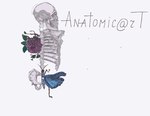
 Project: Anatomic@art

Country members are Tunisia, Ukraine and Spain (Leopoldo Queipo from Melilla  and Antonio Trueba High Schools ) and students who took part in it are 14-17-year olds. 

You can access the project from  here.

The project aims to study the  specific anatomy  of the human body and its relation with works of art from different subjects  (Literature, Drawing, Sculpture, Music, ...). Students work in groups  which focus on  an  organ, explain  its structure and physiology and how they have been the object of important works of art. 

The project was awarded Four European Quality labels so I must say I feel very proud that a teacher from our CLIL seminar has taken part in  such a powerful project which shows clear evidence that through e-Twinning schools can develop foreign  languages, digital skills, specific subjects like Science and creativity.

Let me finish by encouraging all of you to take part in an e-Twinning project that wil fit perfectly into your CLIL contexts and reminding you that Amaya will show us the process they followed  in our next seminar session in May.


Safer Internet Day 2018


Safer Internet Day (SID)   seeks to promote safer and more responsible use of online technology and mobile devices, especially among children and young people across the world.  SID 2018 will be celebrated on 6 February 2018 with the theme of "Create, connect and share respect: A better internet starts with  you".

If you visit Safer Internet Website,  you will  find a gallery of resources you can use for educational activities. All you have to do is  search by keyword, language and age  to find resources to meet your needs.

If you allow me to help you choose a very useful resource for teenage learners, have a look at  this one : it is a lesson plan on  how to make strong passwords, how to avoid malware and hacking by keeping anti-virus and software updated always, and how to detect safe web shops from online scam shops. It also  offers advice on how to take control over your digital life, and on what to and what not to share on your social media profiles. You can download the resource  ”Staying Safe Online – Youth and Digital Security” here.

(This resource is an international version of the original Danish booklet “Unge og Digital Sikkerhed”, which is used in the Danish Money Week from 2017 and beyond.  Original version was  written in corporation by a series of Danish organizations and institutions: Finance Denmark, The Danish Police, The Agency for Digitization, The e-mark, The Media Council for Children and Young People in Denmark.)

I wish to acknowledge the great help provided by the organizations and institutions above and  extend my gratitude to  the many partners that support Safer Internet Day  with awareness-raising events and educational  resources to  make the internet a safer and better place.

If you prefer to approach the topic through Music, I recommend this complete resource by the British Council  based  on " I like it", song which was  created three years ago  by members of GMCBeats rap workshops and Webwise Ireland to celebrate Safer Internet Day.  The resource  includes  both interactive exercises and   worksheets that can be downloaded.

Why not enjoy the rap song while you decide on the resource you like the best?

CV- Historical Europass


Have you ever wondered what Galileo's curriculum would have been like? Or Marie Curie's? Or Napoleon's? Europass has thought of an original way to make students between 14 and 18 learn how to write a CV while deepening on the aptitudes and biography of a historical character they admire. 


The jury will consider both creativity and historical coherence. Therefore, accuracy regarding both the biodata of the chosen character and  the different sections of the CV within Europass platform will be taken into account.

You can download the template of the European CV and a series of video tutorials from here.

If your students decide to take part, they have to send their CVs in pdf format together with the registration template (Anexo 1) to the following e-mail address: 

europass@sepie.es (Asunto: CV histórico

If students' CVs are chosen, they will be invited to Infoday Europass in Madrid and they will also enjoy public acknowledgement of their work. 

Everything you need to know in order to take part in Historical Europass can be found in this document.

Sooner than later, our students will have to create a real CV when they start searching for a job so we may as well start teaching them how to write this document to present their skills and qualifications effectively and clearly. Why not start with what this  historical CV Europass suggests ?