Showing posts with label STEAM. Show all posts

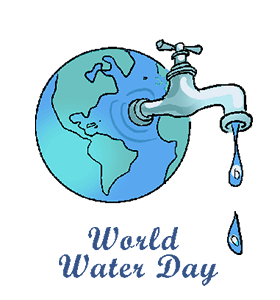
World Water Day 2019 on March 22nd


What is World Water Day?  World Water Day serves to raise awareness about water issues such as sanitation problems and water shortages in many parts of the world today.

What can we do in our classrooms to foster this awareness among our students?

I would suggest spending at least a session to watch the following video and reflect on this serious issue:


While  students are watching the video, you can ask them to take notes using this Cornell note-taking template.

If you wish to develop a gap-fill activity, click here.

You can access the complete video transcript from this link.

In any of the choices above, I would start by pre-teaching vocabulary.  First, you can create a word cloud with the essential words and interact with students to see if they know the words. This is a word cloud I have created. If students need further  help and you want to provide them with  definitions of the words, you can use this worksheet I have prepared. 

After working on the essential vocabulary as we described above, you can ask students to work in pairs and retell the content of the video using at least  5  key  words from the list. Finally, some pairs would read their versions of the story  aloud to their peers. By doing this final activity students will be developing their listening and speaking skills as they are used in real-life, that is, combining them as speakers of a language do. 

A great platform with over 12,000 resources on STEM subjects

This is a brief post which I hope will be very useful for all of you who teach STEM subjects both at Primary and Secondary levels. I developed a seminar session on STEM resources last academic year and I recommended you to register  on the National STEM Centre website. If you have not registered yet, this is a great moment to do so because there have been very powerful developments on the website. Among them, right now I would like to suggest that you should enter the resources section  and start having a look at the collections that best suit your teaching objectives.

If you enter this link, you will be able to filter the resources you need by subject, age, key stage, type and publication year. All pdf files are downloadable for free but there are other resources which may be interesting for you too: videos, simulations, lectures, games, and many others.

This website also gives you the chance to share your work and find helpful teacher-made resources to use in your teaching. You can see these resources made by other teachers here. 

Needless to say that this powerful platform I am writing about needs a deep analysis and that is one of the topics I will develop in our next seminar session on January 8th 2019.

Therefore, I would like to finish this post   by  telling you that it was a pleasure to work with you in 2018 and I promise to continue helping you to develop your content areas through English in 2019. 


Developing creativity across the content areas


This  post is a follow-up of the previous one, which I wrote to highlight our obligation to ensure that our students will be ready for the challenges they will have to face when they leave our classrooms and enter the professional world. 

Today I would like to reflect on one of these "21st century skills", which has been described as creativity. We have to  try hard to help students to develop this skill and we have to assess it too.

Let me start by  sharing this short video that made me draw some  interesting conclusions: 


After seeing it, I reckon you will agree with me that we sometimes forget that our students need time to be creative. Maybe we  do not forget it but we  do not allow them to spend longer on creative projects because we tend to think about the number of projects /lesson plans that we still have to carry out and we are worried we will not manage to cover them all. Therefore, let us never forget that we should always choose quality over quantity. 

In my view,  special attention should be drawn to the fact that students also  need time to share their  creative outcomes  with their peers. If they do this,  they will learn a lot together and  others' acknowledgement will help to build on their  self confidence. 

As I pointed out above, we have to find ways to assess creativity because assessment has a clear  impact on students' motivation so you can start by explaining that you will consider creativity as part of your assessment and you can start with a simple tool they can easily understand. For example, if students have carried out a PowerPoint Presentation on a topic, you can use this assessment template.  

I  will continue developing this challenging topic in future seminar sessions but now I would like to share a very recent publication by University of Navarre: "Towards Creativity in CLIL", which offers very good examples of creative projects for different content areas.


My most sincere congratulations to participants in these projects:  Ruth Breeze,  Melinda Dooly, Alessandra Agati, Fernando Echarri, Amaia Alvarez, Maika Goya, Laura Medina, Izaskun Tomasena, Henri Eric Castleberry, Laura Giamattei, Abel Miguel-Marqués, Angela Ruotolo, Immacolata Ercolino and Daniela Amendola. 

Teaching the Periodic table of elements through Poetry and Music


Can you think of a better way to  focus  on the Periodic table of elements than through Poetry and Music?  Let me explain what I mean:

- Make your students go to this link  where they will find Mary Soon Lee's original Periodic Table, which will enable them to review the elements  by enjoying Kaiku poems. How? Just by clicking over an element to read the Haiku.

I suggest that you should exploit Lee's idea as follows: 

You can  start by explaining that a Haiku is a Japanese poem consisting of three lines that do not rhyme. You should add that traditional Haikus follow this structure: the first line is 5 syllables. The second line is 7 syllables. The third line is 5 syllables. That's why they are called the 5-7-5 structure.

Then, you can proceed to ask students to work in pairs, choose one  element, read and understand the meaning of the Haiku and create a new Haiku of their own for the chosen element. Encourage the use of on-line dictionaries while students are reading the Haikus and creating their own ones. 

Finally, students would share their elements and the Haikus they have created with their peers. 


- Students will probably have difficulties to pronounce the names of the elements properly . How can you help them? Make them  listen to the Periodic Table song AsapScience offers us on its YouTube channel.


You can find the lyrics here. (No fill in the gaps this time because students will have to make a huge effort  to follow the lines, so just ask them to sing along after they have listened to it twice.)

Please, share your views on the activities above with me. I will be eager to know if they are  useful for you.